
Why Every Growing Church Needs Church Management Software
Introduction
Running a church involves much more than preparing sermons and organising worship services. Behind every successful ministry is a team working hard to manage members, track attendance, organise events, handle finances, communicate announcements, and coordinate different departments.
When a church is small, notebooks, spreadsheets, and messaging apps may seem sufficient. However, as the congregation grows, these methods can become difficult to maintain. Records may become scattered, important information may be lost, and administrative responsibilities may take time away from the church's core mission.
This is where church management software becomes valuable.
What Is Church Management Software?
Church management software is a digital solution designed to help churches organise and manage their day-to-day activities. It brings essential administrative functions into one system, making it easier for church leaders and authorised team members to access information and coordinate responsibilities.
Depending on the platform, these functions can include:
- Member management: Maintain organised member records and contact information.
- Attendance tracking: Monitor attendance at services, meetings, and other church activities.
- Financial management: Organise financial records and improve visibility into church income and expenditure.
- Event management: Plan church programmes, meetings, conferences, and special services.
- Communication: Help church leaders share announcements and keep members informed.
- Reporting: Generate useful summaries that support planning and decision-making.
Rather than relying on multiple disconnected tools, churches can use a centralised system to improve administrative organisation.
Five Reasons Your Church Should Consider Digital Management
1. Keep Church Records Organised
Member information is an important part of church administration. When records are kept in different notebooks, spreadsheets, or personal devices, retrieving accurate information can become difficult.
A church management platform provides a more structured way to maintain member records, update information, and make relevant details available to authorised personnel.
2. Improve Attendance Tracking
Attendance records help churches understand participation in worship services, programmes, and other activities.
A structured digital approach makes it easier to maintain records over time and identify participation patterns that may inform future planning.
3. Improve Financial Accountability
Church finances require careful documentation and responsible oversight. Digital financial management tools can help organise transactions, maintain records, and prepare reports.
Although software does not replace proper financial controls or independent oversight, it can support more consistent record-keeping and informed decision-making.
4. Simplify Events and Church Programmes
Churches frequently organise prayer meetings, conventions, leadership training, outreach programmes, and special services. Managing these activities across different departments can be challenging.
Centralised event information helps teams stay coordinated and reduces the likelihood of overlooking important details.
5. Give Ministry Teams More Time for Ministry
Administrative work is necessary, but it should not consume all the time available to church leaders and volunteers.
By improving how information is stored, retrieved, and managed, church management software can reduce repetitive work and allow teams to devote more attention to pastoral care, discipleship, outreach, and community engagement.
When Is the Right Time to Adopt Church Management Software?
There is no single congregation size that determines when a church should go digital. The need often becomes clear when:
- Member records are difficult to update or retrieve.
- Attendance reports take too long to prepare.
- Financial information is spread across different files.
- Church departments struggle to coordinate activities.
- Administrative tasks depend heavily on one individual.
- Church leadership needs clearer, more consistent reports.
Recognising these challenges early can help a church establish better systems before its administrative workload becomes overwhelming.
How Faith Links Can Help
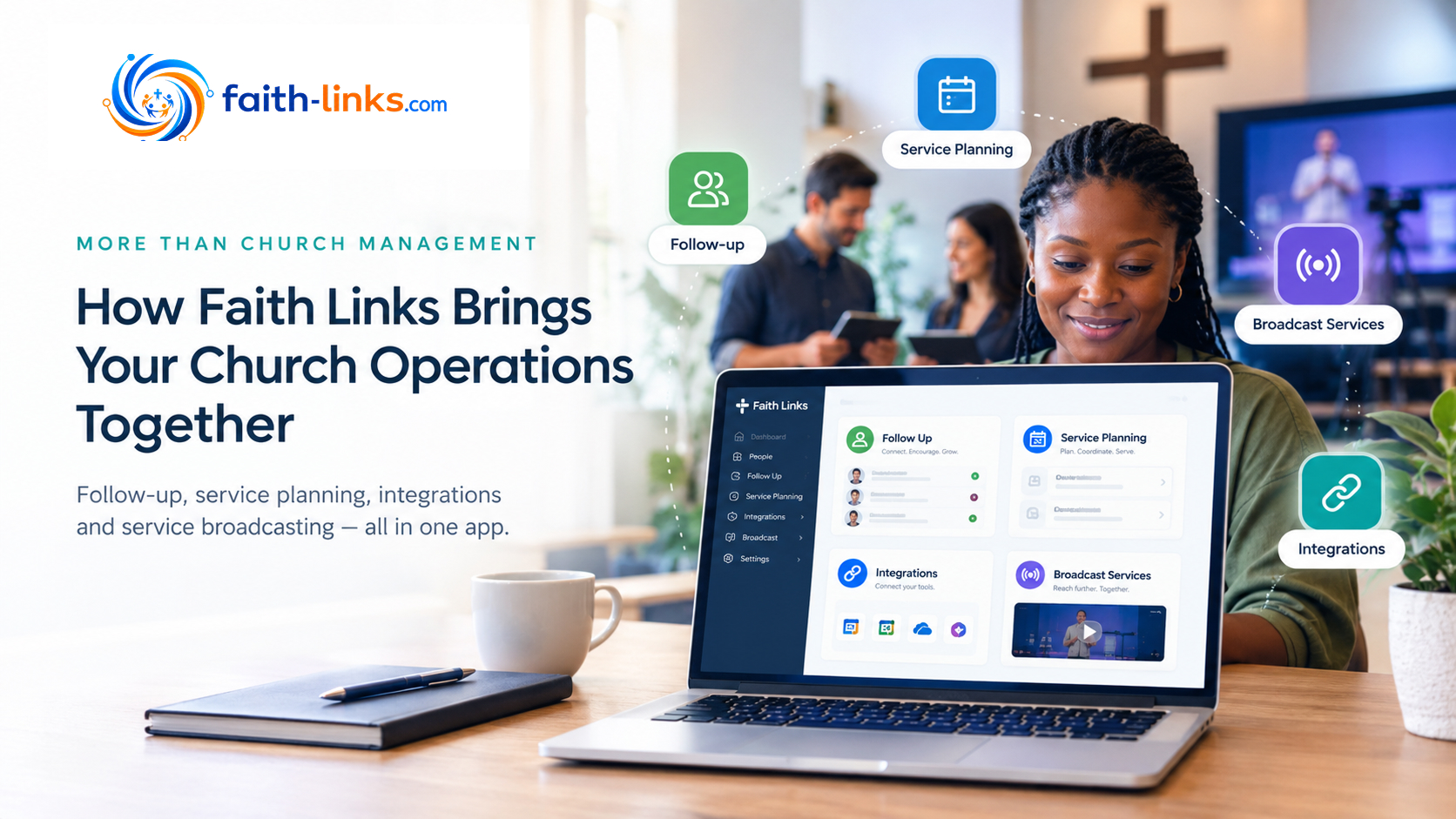
Faith Links is designed around the administrative needs of churches. By bringing key church management activities into a digital environment, the platform aims to help church teams organise their work, maintain records, and coordinate everyday operations more effectively.
Whether your church is establishing more structured processes or looking for a better way to manage existing activities, choosing the right management system can be an important step towards sustainable growth.
Conclusion
Church growth brings opportunities, but it also introduces new administrative responsibilities. A well-organised management system helps churches maintain accurate records, improve coordination, and support responsible decision-making.
Technology should never replace the personal relationships, spiritual leadership, and community that define a church. Instead, it should support the people doing this important work.
Ready to bring more structure to your church administration? Explore Faith Links at faith-links.com.